
Yes. Chiropractic care is generally safe during pregnancy when performed by an AHPRA-registered chiropractor trained in prenatal techniques, using pregnancy-specific adjustments and positioning. Confirm with your GP or midwife first.
You’re 28 weeks in, your lower back won’t quit, and the heat pack you’ve been relying on barely takes the edge off anymore. Sound familiar?
If you’re pregnant in Australia and looking for relief beyond painkillers, chiropractic pregnancy care might be on your radar. But you probably have questions. Is it actually safe? Will they adjust you the same way they would when you’re not pregnant? And is it worth the cost?
You’re not alone in wondering. More Australian mums are turning to prenatal chiropractic for back pain, pelvic discomfort, and other pregnancy aches, and the research is catching up.
This article breaks down what pregnancy chiropractic care involves, what the evidence says about safety, and how to decide if it’s the right fit for you and your baby.
What Does Pregnancy Chiropractic Care Actually Involve?
Pregnancy chiropractic care is a gentle, modified form of spinal and pelvic adjustment designed specifically for the changing body of an expecting mum. It’s not the same as a standard session, and a good prenatal chiropractor won’t treat you like one.
Here’s what to expect:
- Lighter techniques and softer pressure than a regular chiropractic adjustment.
- Pregnancy-specific tables or cushions that accommodate your growing belly so you can lie comfortably.
- No lying flat on your back in later trimesters, with positions adapted to your stage of pregnancy.
- Focus on high-strain areas like your lower back, pelvis, and hips.
The goal isn’t dramatic “cracking.” It’s about restoring alignment, easing joint and ligament tension, and helping your body adapt to the extra load it’s carrying.
If you’re in Australia, here’s something reassuring: chiropractors are registered health professionals regulated by AHPRA (the Australian Health Practitioner Regulation Agency).
They’ve completed at least five years of university training and are held to national standards. It’s not an unregulated space, which matters when you’re trusting someone with your care during pregnancy.
The Webster Technique and Why It Comes Up So Often
The Webster Technique is a specific chiropractic adjustment focused on balancing the pelvis during pregnancy.
It works by reducing tension in the pelvic joints and surrounding ligaments (particularly the round ligaments), which helps the pelvis function more evenly as your body changes.
You’ll often hear it linked to breech babies, and that’s where things get a little muddled. The technique doesn’t manually turn a baby.
What it does is create a more balanced pelvic environment, which may give your baby more room to move into an optimal position on their own. The distinction matters because it sets realistic expectations about what the adjustment can and can’t do.
Many Australian pregnancy chiropractors are trained in the Webster Technique, and some specifically seek certification through the International Chiropractic Pediatric Association (ICPA). If pelvic balance is a concern for you, it’s worth asking your chiropractor whether they’re Webster-certified.
Is Chiropractic Safe During Pregnancy? What the Evidence Says

Yes, chiropractic care is generally considered safe during pregnancy when performed by a qualified practitioner using pregnancy-appropriate techniques.
A 2012 critical review published in Chiropractic & Manual Therapies analyzed case reports and surveys on spinal manipulation in pregnant women and found adverse events to be rare and mostly minor (e.g., transient soreness), with no confirmed serious incidents directly linked to treatment in the reviewed data.
That’s reassuring, but it doesn’t mean every pregnant woman should book in without a second thought.
There are situations where you’ll want to get the green light from your obstetrician or midwife first. These include:
- Placenta previa (where the placenta covers part or all of the cervix)
- High-risk pregnancies with complications like preeclampsia or a history of preterm labour
- Vaginal bleeding that hasn’t been assessed or explained
- Ectopic pregnancy or other conditions that require close medical monitoring
A good pregnancy chiropractor in Australia will always ask about your medical history, any complications, and who else is part of your care team before they start treatment. If they don’t ask, that’s a red flag.
The best outcomes happen when your chiropractor works alongside your GP, midwife, or obstetrician rather than in isolation. Prenatal care is a team effort, and chiropractic should fit into that team, not replace any part of it.
Common Pregnancy Symptoms That Chiropractic Can Help With
Pregnancy changes your body fast, and not all of those changes feel great. Here are some of the most common symptoms that bring expecting mums to a chiropractor’s door.
Lower Back Pain
This is the big one. According to the American Pregnancy Association, up to 70% of pregnant women experience lower back pain at some point during pregnancy.
As your baby grows, your centre of gravity shifts forward, putting extra strain on your lumbar spine.
Your body also produces a hormone called relaxin, which loosens your ligaments to prepare for birth but also makes your joints less stable.
Chiropractic adjustments can help by restoring alignment and reducing the pressure on overworked muscles and joints.
Pelvic Girdle Pain
That deep, aching pain around your pelvis, sometimes at the front (near the pubic bone) and sometimes at the back near the sacroiliac joints.
Relaxin plays a role here too, loosening the pelvic joints more than usual and creating instability.
For Australian mums juggling work, other kids, or long commutes, this pain can become overwhelming. A pregnancy chiropractor can work on pelvic balance to ease the load.
Hip Pain
As your pelvis widens and your posture shifts, your hips often take the hit. Many women notice it most at night when lying on their side.
Chiropractic care can address the alignment changes contributing to hip discomfort and improve mobility.
Sciatica-Like Symptoms
That sharp, shooting pain running from your lower back or buttock down your leg. During pregnancy, it’s often caused by the baby’s position or by pelvic changes putting pressure on the sciatic nerve.
While true sciatica is less common than people think, the symptoms are real and chiropractic adjustments focused on the lower spine and pelvis can help take the pressure off.
Third Trimester Back Pain: Why It Peaks and What Helps
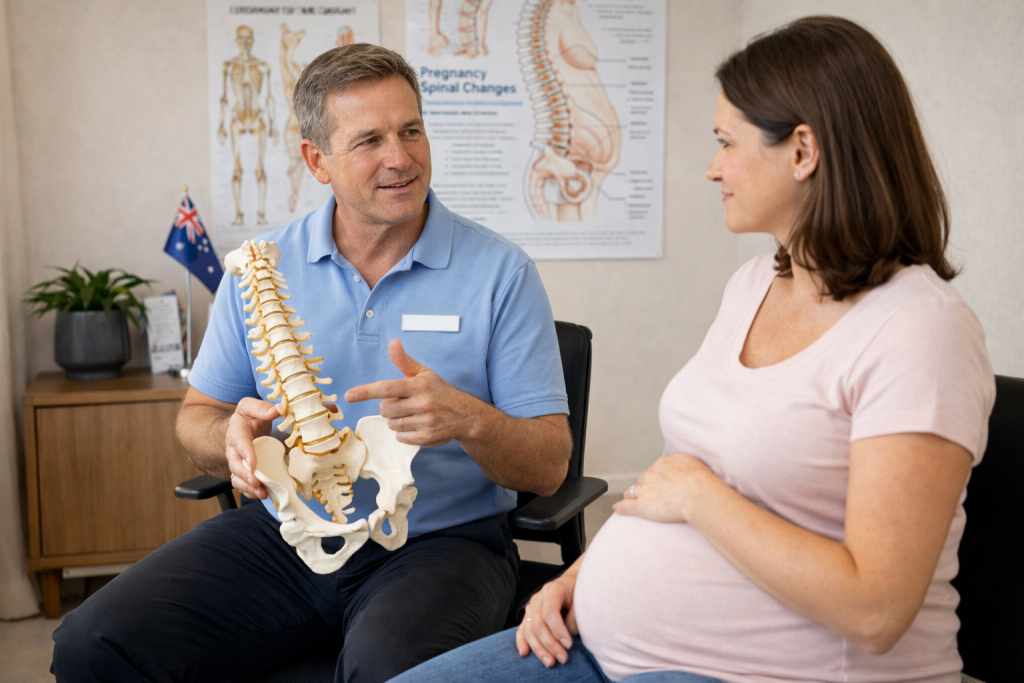
The third trimester is when most pregnant women hit a wall with back and pelvic pain. Your baby is gaining weight quickly, your belly is at its heaviest, and your posture has shifted significantly to compensate.
On top of that, relaxin levels are still high, which means your ligaments are at their loosest and your joints are at their least stable. It’s a recipe for discomfort.
This is also the stage when many women first walk into a chiropractor’s clinic. The pain has gone from manageable to constant, and the usual fixes (pillows, stretches, hot water bottles) aren’t cutting it anymore.
The good news is that it’s not too late to start. A pregnancy chiropractor can still help in the third trimester with gentle adjustments tailored to your body at that stage. But chiropractic works best when it’s part of a bigger picture.
Posture guidance for sitting, standing, and sleeping can reduce strain between appointments.
Simple at-home stretches (like cat-cow or pelvic tilts) can keep things moving. Together, these small steps add up to real relief in those final weeks before birth.
How to Find a Pregnancy Chiropractor in Australia
Start by checking that your chiropractor is AHPRA-registered, has specific training or experience in prenatal care, and uses pregnancy-safe equipment like adjustable tables or belly cushions. These three things are non-negotiable. If a chiropractor can’t confirm all three, keep looking.
Your GP, midwife, or obstetrician can be a great starting point for recommendations. They’ll often know which local chiropractors have a solid reputation for working with pregnant women and, just as importantly, which ones communicate well with the rest of your care team.
Many Australian chiropractic clinics now list pregnancy care as a specialty on their websites, which makes searching easier.
Look for clinics that mention prenatal chiropractic, the Webster Technique, or pregnancy-specific consultations on their services page.
A few other things worth asking before you book:
- Do you regularly treat pregnant women? Experience matters. A chiropractor who sees pregnant patients every week will be more confident and skilled than one who does it occasionally.
- Will you coordinate with my midwife or obstetrician? The answer should always be yes.
- What does a typical first appointment look like? A thorough intake, health history review, and a clear explanation of what they plan to do should come before any hands-on work.
Trust your instincts too. If something feels rushed, dismissive, or overly salesy during your first visit, it’s okay to try somewhere else.
Can You See a Chiropractor After Birth Too?

Yes, postpartum chiropractic care can help with recovery by addressing the spinal and pelvic alignment changes that build up over nine months of pregnancy and birth.
Your body doesn’t just snap back once your baby arrives, and some issues actually show up after delivery.
Common postpartum complaints include upper back and neck tension from breastfeeding, continued pelvic instability, and general stiffness from the new demands of caring for a newborn.
Many Australian mums return for a few sessions in the weeks after birth to support their recovery alongside physiotherapy or other allied health care.
It’s not about long-term treatment plans. For most women, a handful of postpartum visits is enough to help their body recalibrate and feel more like themselves again.
Key Takeaway
Pregnancy is tough on your body. The back pain, the pelvic aches, the hip stiffness that keeps you up at night. None of that is something you just have to push through for nine months.
Chiropractic care during pregnancy is safe, it’s gentle, and for many Australian mums, it makes a genuine difference. The evidence backs it up, and the techniques are specifically adapted for your changing body at every stage.
The most important thing is finding the right practitioner. Someone who’s AHPRA-registered, experienced with pregnant women, and willing to work alongside your midwife or obstetrician. That combination gives you the best chance of real relief.
If you’re dealing with pregnancy-related pain and want a natural, drug-free approach, we’d love to help.
At Nook Chiropractic, Dr. Kyle Duncan works with expecting mums to ease discomfort, support better posture, and help your body handle the demands of pregnancy.
Book a pregnancy consultation with Nook Chiropractic and let’s get you feeling better.
Frequently Asked Questions
Pregnancy chiropractic sessions in Australia typically range from $60 to $120 per visit, with the initial appointment often costing more. Medicare doesn’t cover routine chiropractic, but many private health funds reimburse part of the fee through extras cover. Check your policy’s annual limits and any waiting periods before booking.
You can see a chiropractor in the first trimester, and some women start early for back or pelvic discomfort. Techniques stay gentle and are adapted to your stage. If you have bleeding, severe nausea, or a high-risk pregnancy, get the okay from your GP or midwife first.
Most pregnant women visit fortnightly or monthly, with frequency often rising in the third trimester as discomfort peaks. A typical course is a handful of sessions, not an open-ended plan. A good chiropractor reassesses regularly and tapers your visits as symptoms ease rather than locking you into a package.
Contact your doctor or midwife straight away if you notice vaginal bleeding, fluid leaking, reduced baby movements, contractions, or sharp pelvic pain after a session. These are not normal responses to a gentle adjustment. Mild soreness that fades within a day is expected and nothing to worry about.
All three can ease pregnancy discomfort, but they work differently. Chiropractors focus on spinal and pelvic alignment through adjustments, osteopaths use broader hands-on methods including soft tissue work, and physiotherapists lean on exercises, strengthening, and rehab. Many Australian mums use a combination, often guided by their midwife.
Chiropractic care may support labour by keeping your pelvis balanced and mobile, which can help your body move more freely during birth. It does not induce labour or guarantee an easier delivery. Treat it as a way to reduce physical strain in the lead-up, not a birth intervention.
No, you don’t need a referral to see a chiropractor in Australia, and you can book directly. A referral isn’t required for private visits, though your GP or midwife can point you to a trusted prenatal chiropractor. With a high-risk pregnancy, check with them before you start.