
You wake up with that familiar tight pull in your neck, and by the time you sit through traffic, answer emails, or stare at your screen for a few hours, it has turned into a full distraction.
A chiropractor is often sought out when that nagging stiffness starts affecting your focus, sleep, and ability to move comfortably. The tricky part is that neck pain rarely arrives all at once.
It usually builds quietly through poor posture, long desk hours, stress, or awkward sleep, then suddenly feels impossible to ignore. If that sounds familiar, you are not alone.
This guide will help you understand when simple home care may be enough, when it is time to seek professional help, and what to expect from chiropractic care for neck pain.
Why Your Neck Feels Stiff, Sore, or Hard to Turn
Neck pain usually starts with everyday habits, not one dramatic moment. A lot of the time, it comes from poor posture, especially if you spend hours looking down at your phone or leaning toward a laptop.
Your neck ends up carrying tension for longer than it should, and that can leave it feeling tight, sore, or difficult to turn by the end of the day.
Desk strain is another big reason. Sitting in one position for too long, working without proper support, or keeping your shoulders tense while typing can overload the muscles around your neck and upper back.
Even your sleep position can play a part. A pillow that does not support your neck properly, or sleeping in an awkward position, can leave you waking up stiff and uncomfortable.

Stress matters too. When you are under pressure, your body often holds that tension in the neck and shoulders without you even noticing.
Over time, that can lead to recurring tightness, headaches, and reduced movement.
For some people, the problem also becomes a pattern where the neck never feels fully free, even after rest.
In Australia, long commutes, screen-heavy work, and sedentary routines all add to the problem.
That is why so many people start looking for neck stiffness treatment only after the discomfort begins affecting work, sleep, or simple daily movement.
What Chiropractors Mean by Neck Stiffness
Neck stiffness is reduced movement in the neck, often linked to muscle tension, joint restriction, or irritation of the surrounding tissues.
In simple terms, it means your neck does not move as freely or comfortably as it should. You may notice it when you try to check behind you while driving, turn your head during a conversation, or look down at your phone or laptop.
It can also make sleep uncomfortable because finding a relaxed position becomes harder.
At work, even small movements can start to feel annoying or strained, especially if you sit for long periods.
What seems like a minor limitation can quickly affect how you move through the day.
When Should You See a Chiropractor for Neck Pain?

You should consider seeing a chiropractor for neck pain when the discomfort starts affecting how you move, work, or rest, and it is not settling with simple home care.
A professional assessment may be worth it when your neck pain:
- keeps returning
- limits how far you can turn your head
- triggers headaches or upper shoulder tension
- does not improve after a few days of rest, stretching, or posture changes
- flares up after desk work, driving, or sleeping awkwardly
- keeps interrupting your normal routine
In real life, this often looks less dramatic than people expect. It might be the neck pain that shows up every week after long hours at your laptop, the stiffness that keeps coming back after your commute, or the soreness that makes it hard to reverse your car, sleep well, or focus at work.
Some people also notice a pattern where the pain eases for a while, then returns as soon as they get busy again. When that starts happening, it is usually a sign the issue needs more than temporary relief.
When Neck Pain Needs Urgent Medical Care First
Some neck pain needs medical attention before you consider any hands-on treatment.
Seek urgent assessment from a GP, emergency department, or another appropriate medical professional if your pain follows severe trauma, or comes with numbness, weakness, fever, dizziness, unexplained weight loss, or pain shooting into the arm. These signs can point to something more serious than routine muscle or joint strain.
A chronic neck pain chiropractor can help with many musculoskeletal problems, especially when stiffness, posture strain, and recurring tension are involved.
But when red flags are present, safety comes first. The priority is getting the right medical evaluation so the cause is properly identified before any chiropractic care is considered.
Can a Chiropractor Help a Stiff Neck and Tension Headaches?
A chiropractor may help a stiff neck and some tension-related headaches by assessing movement, posture, and joint function, then building a personalised treatment plan that may include hands-on care, practical advice, and simple exercises.
For the right patient, that approach can support better movement, less pain, and fewer day-to-day flare-ups.
This matters because neck pain is often tied to how you move and how long you stay in the same position.
Hours at a desk, phone use, driving, and poor workstation setup can load the neck and upper shoulders until stiffness starts feeding into tension across the head.
When the neck stops moving well, the surrounding muscles often work harder, which can leave you feeling tight through the shoulders, base of the skull, and temples.
That is where chiropractic care for neck pain may be useful as part of a broader plan focused on mobility, posture, and symptom control.
What Results Can You Realistically Expect
Results can vary, and that is normal. Some people notice early relief in movement, less muscle tension, or fewer headaches after the first few visits.
Others need a longer course of care, especially if the problem has been building for months, keeps returning, or is tied to work habits, posture, or reduced mobility.
The goal is not to promise an instant fix. It is to improve how your neck moves, reduce day-to-day discomfort, and address the reasons the pain keeps coming back.
A good chiropractor should explain what they are seeing, what progress may look like, and when your plan needs to be adjusted.
| What you may notice | What it often depends on |
| Easier neck movement | How restricted the neck was at the start |
| Less muscle tightness | How much tension is coming from stress or posture |
| Fewer tension headaches | Whether the neck is contributing to headache symptoms |
| Slower progress | How long the issue has been present |
| Need for ongoing care | Severity, recurrence, and the underlying cause |
What Happens During a Chiropractic Neck Adjustment?

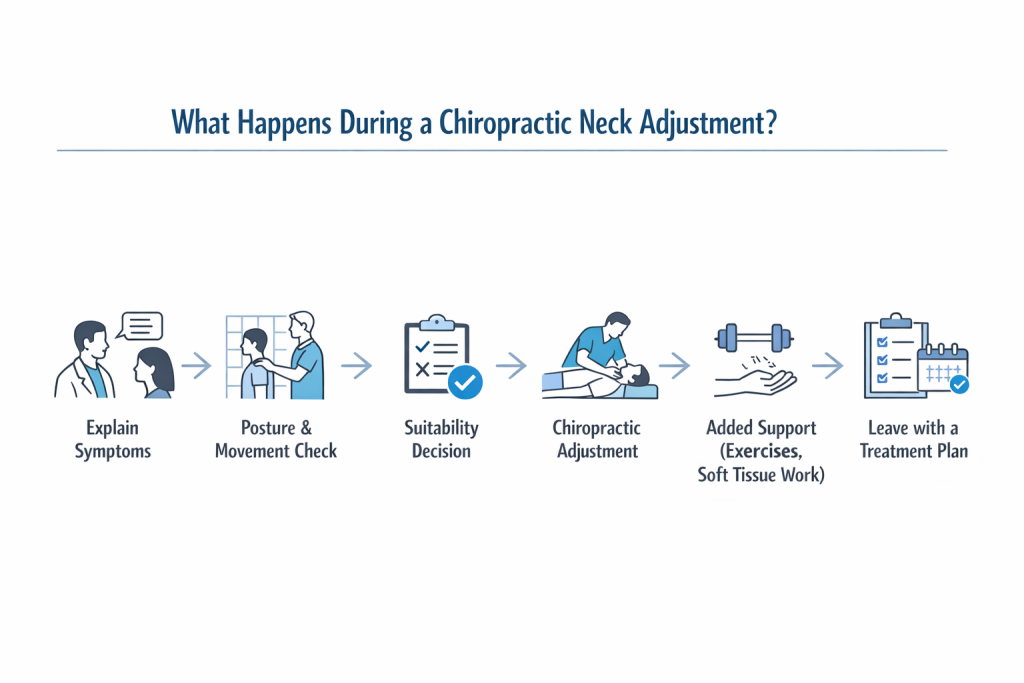
If you are wondering what the appointment actually looks like, it usually follows a clear step-by-step process. The goal is to understand what is causing your neck pain first, then decide whether a chiropractic neck adjustment fits into a broader care plan.
Step 1: You explain what you are feeling
The visit usually starts with a conversation about your symptoms. The chiropractor may ask when the pain began, where you feel it most, whether it spreads into your shoulders, arms, or head, and what activities make it worse. They may also ask about desk work, screen time, sleep position, past injuries, and how long the stiffness has been going on.
Step 2: They check your posture and neck movement
Next, they will usually look at how you stand, sit, and move your neck. This can include checking how far you can turn your head, whether one side feels tighter than the other, and which movements trigger discomfort. These posture and mobility checks help them understand whether the problem looks more like muscle tension, joint restriction, or a recurring movement issue.
Step 3: They decide whether an adjustment is appropriate
A chiropractic neck adjustment should not be automatic. After the assessment, the chiropractor decides whether it is suitable for your case.
If it is, they should explain what they plan to do and why. This keeps the process clear and helps you understand what to expect before any hands-on treatment begins.
Step 4: The adjustment is performed if needed
If an adjustment is appropriate, the chiropractor will position your neck carefully and use a controlled technique designed to improve movement in the affected area.
For some people, this can be one of the neck adjustment benefits, especially when the aim is to reduce restriction and help the neck move more comfortably. It is usually quick and should feel deliberate, not rushed.
Step 5: Other treatment may be added to support the result
The adjustment is often only one part of the visit. Depending on your needs, the chiropractor may also use soft tissue work, give mobility advice, recommend posture changes, or show you simple home exercises. This matters because neck pain often comes from daily habits, not just one stiff joint.
Step 6: You leave with a plan, not just a treatment
By the end of the appointment, you should have a clearer idea of what may be causing the pain, what the treatment is trying to improve, and what you can do between visits. A good chiropractor should explain what progress may look like and how your plan may change based on your response.
Is a Chiropractic Neck Adjustment Safe?
Chiropractic neck adjustments are generally considered safe when performed by a qualified practitioner after an appropriate assessment, but not every patient is suitable for the same technique.
That is why a careful chiropractor should screen for red flags, review your symptoms and history, and decide whether a neck adjustment is the right option for you in the first place.
Safety also depends on clear communication. You should be told what the treatment involves, why it is being recommended, what the expected benefits are, and what the material risks may be before you agree to anything.
From there, treatment should be tailored to your condition, not applied as a standard routine. In other words, proper screening, informed consent, and individualised care all matter.
What to Look for When Booking a Neck Pain Chiropractor in Australia
Choosing the right provider matters just as much as deciding to get help in the first place. If you are comparing clinics, look for signs that the care will be thorough, practical, and tailored to your needs, not rushed or overly sales-driven.
- A clear assessment process: The chiropractor should take time to ask about your symptoms, history, posture, daily habits, and movement before recommending treatment.
- A personalised treatment plan: Good care should match your specific issue, whether you are dealing with recurring desk strain, need a tension neck pain chiropractor, or want help from a chiropractor for stiff neck symptoms.
- Transparent communication: You should understand what the practitioner thinks is causing the problem, what treatment involves, and what kind of progress is realistic.
- No pressure to commit too quickly: A trustworthy provider will explain your options clearly and let the quality of their care speak for itself.
- Relevant experience: It helps to choose someone who regularly works with neck pain, tension headaches, and mobility-related complaints.
- Practical accessibility in Australia: Check local clinic location, appointment availability, and practitioner credentials so ongoing care is easy to manage if needed.
Key Takeaway
Neck pain often begins as something easy to brush off. It might feel like a bit of morning stiffness, a dull ache after desk work, or tension that comes and goes.
But once it starts affecting how you turn your head, focus at work, sleep comfortably, or get through the day without irritation, it stops being a small issue.
Knowing when to see a neck pain chiropractor helps you act sooner, get the right assessment, and avoid letting recurring pain drag on. If your neck pain keeps returning or is starting to interfere with daily life, it may be time to take the next step.
Book an appointment or consultation with Nook Chiropractic to get tailored care that fits your symptoms, movement, and recovery goals.