A sideways curve in the spine that affects posture, comfort and movement. We assess carefully and focus on mobility, comfort and support, with honest expectations.
Scoliosis is a sideways curvature of the spine that can develop in childhood, adolescence or later in life. It ranges from mild and unnoticed to more pronounced curves that affect posture, comfort and movement.
Chiropractic care doesn’t straighten a structural curve, but it can play a supportive role, helping maintain mobility, ease associated tension and keep you moving comfortably. We’re clear about what care can and can’t change.
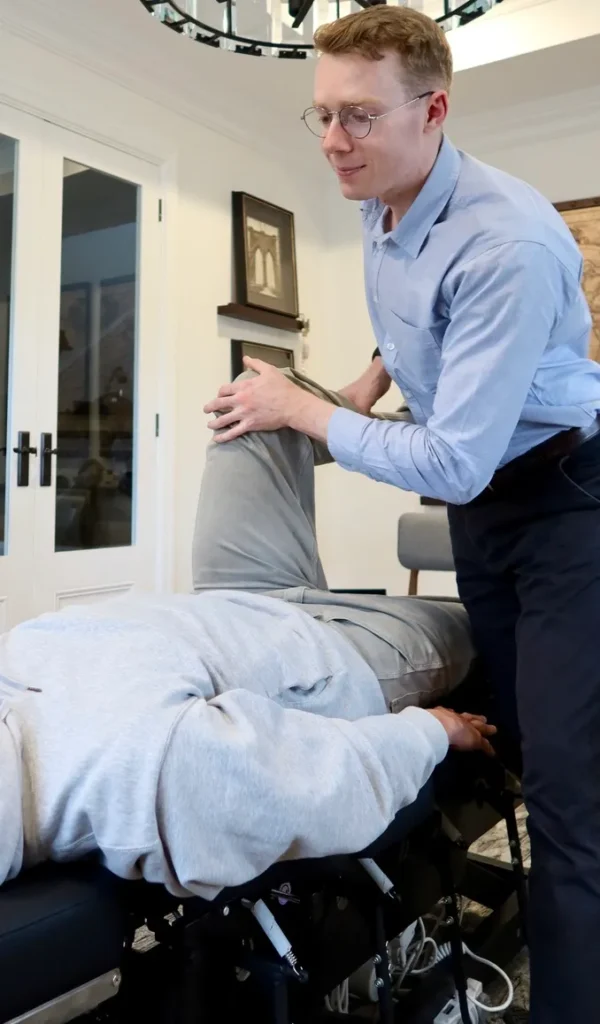
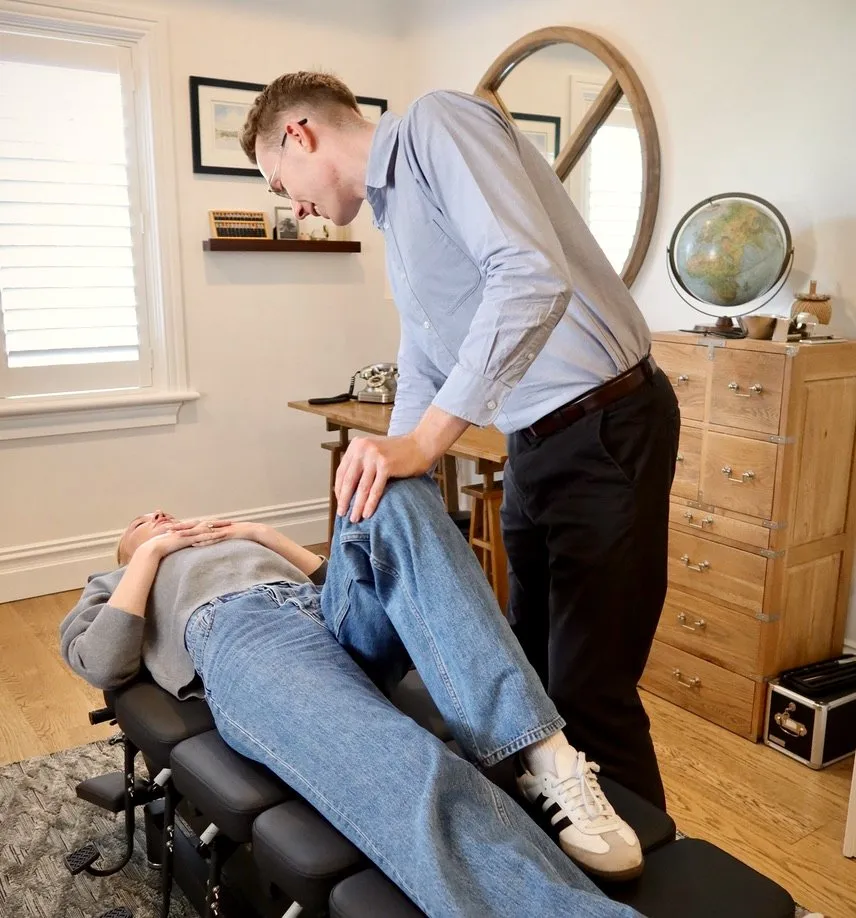
Our role is supportive: assessing how the curve affects your movement and comfort, easing restriction in the surrounding spine, and guiding movement that helps you stay active. Where care beyond our scope is needed, we’ll refer you to the right specialist.
No mystery, no guesswork, a considered process built around what your body needs.
A thorough assessment of the curve, your movement and your comfort.
Honest guidance on how supportive care can help, and its limits.
Gentle, supportive care with referral coordinated where needed.
Scoliosis is a condition characterised by an abnormal curvature of the spine, often shaped like an ‘S’ or ‘C’. It can occur at any age but is most commonly diagnosed in children and adolescents. The cause may be unknown (idiopathic) or related to factors such as spinal degeneration or previous injuries. We help manage scoliosis through a comprehensive, holistic approach to reduce pain and improve quality of life.
Symptoms vary depending on the severity and location of the curvature. Common signs include:
Scoliosis can be caused by a variety of factors. We perform thorough assessments to determine the cause and create an individualised plan.
Chiropractic care is a non-invasive option for managing scoliosis and its symptoms. While adjustments cannot cure scoliosis, they are effective in easing pain, improving posture and supporting spinal health.
For children and adolescents whose bones are still growing, braces may be recommended to prevent the curve from getting worse. While braces don’t correct the curvature, they can prevent further progression.
No. A structural curve isn’t straightened by chiropractic. Our role is supportive, comfort, mobility and movement, and we’re honest about that.
Yes, when it’s tailored. We assess carefully and adapt our approach to your spine.
Absolutely. Scoliosis is best managed as a team, and we’ll coordinate where helpful.
No referral is needed to book an assessment with us.
It’s often caused by a variety of factors, including congenital spinal defects, neuromuscular disorders and degenerative changes. In most cases the exact cause is unknown.
No, but it can help manage the symptoms by reducing pain, improving posture and supporting spinal health.
Surgery is typically considered only for severe cases, where the curve is greater than around 50 degrees or other treatments haven’t been effective.
If a brace is prescribed, it’s typically worn 16 to 23 hours a day until the spine stops growing. The exact duration depends on the severity of the curve and the individual’s growth stage.
Tell us what you need today and we'll point you to the right first step.
Pick the area causing you the most trouble, we'll tailor your first visit around it.
Maintenance visits are for existing patients, and aren't booked online. Reach out and we'll find a regular time that suits you.